
Resources
On April 21, 2021, the Executive Policy Committee (EPC) supported the recommendation from the Riel Community Committee to address the historical context of Bishop Grandin's involvement in the residential school system. The Winnipeg Public Service was directed report back with a process for installing a second historical marker at the entrance of the Bishop Grandin Greenway, now known as Awasisak Mēskanôw Greenway.
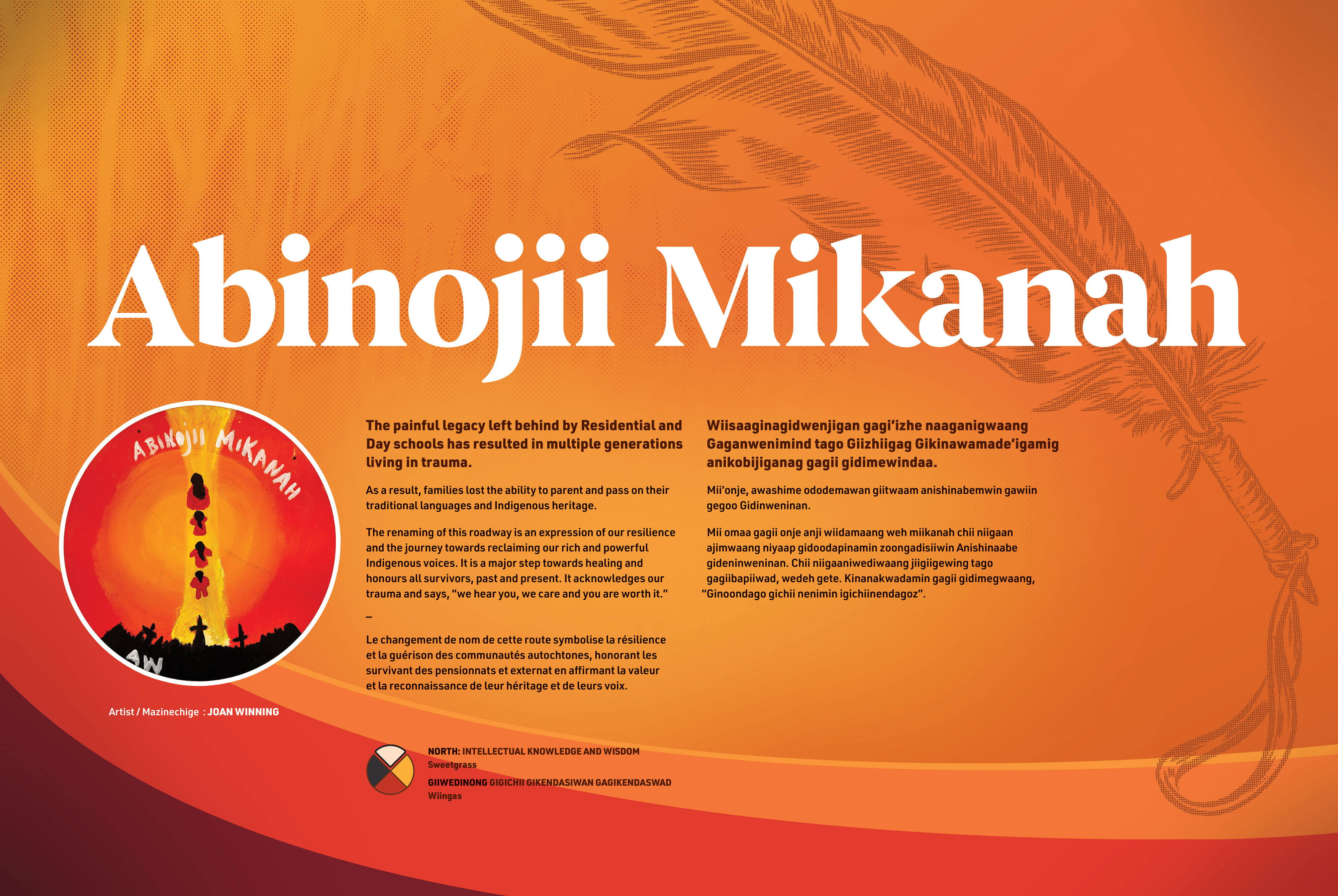
Abinojii Mikanah
Artist/Mazinechige : JOAN WINNING
The painful legacy left behind by Residential and Day schools has resulted in multiple generations Living in trauma.
As a result, families lost the ability to parent and pass on their traditional languages and Indigenous heritage.
The renaming of this roadway is an expression of our resilience and the journey towards reclaiming our rich and powerful Indigenous voices. It is a major step towards healing and honours all survivors, past and present. It acknowledges our trauma and says, "we hear you, we care and you are worth it."
-
Wiisaaginagidwenjigan gagi'izhe naaganigwaang Gaganwenimind tago Giizhiigag Gikinawamade'igamig anikobijiganag gagii gidimewindaa.
Mii'onje, awashime ododemawan giitwaam anishinabemwin gawiin gegoo Gidinweninan.
Mii omaa gagii onje anji wiidamaang weh miikanah chii niigaan ajimwaang niyaap gidoodapinamin zoongadisliwin Anishinaabe gideninweninan. Chii niigaaniwediwaang jiigiigewing tago gaglibapilwad, wedeh gete. Kinanakwadamin gagii gidimegwaang, "Ginoondago gichii nenimin igichiinendagoz".
-
NORTH: INTELLECTUAL KNOWLEDGE AND WISDOM
Sweetgrass
GIIWEDINONG GIGICHI GIKENDASIWAN GAGIKENDASWAD
Wiingas
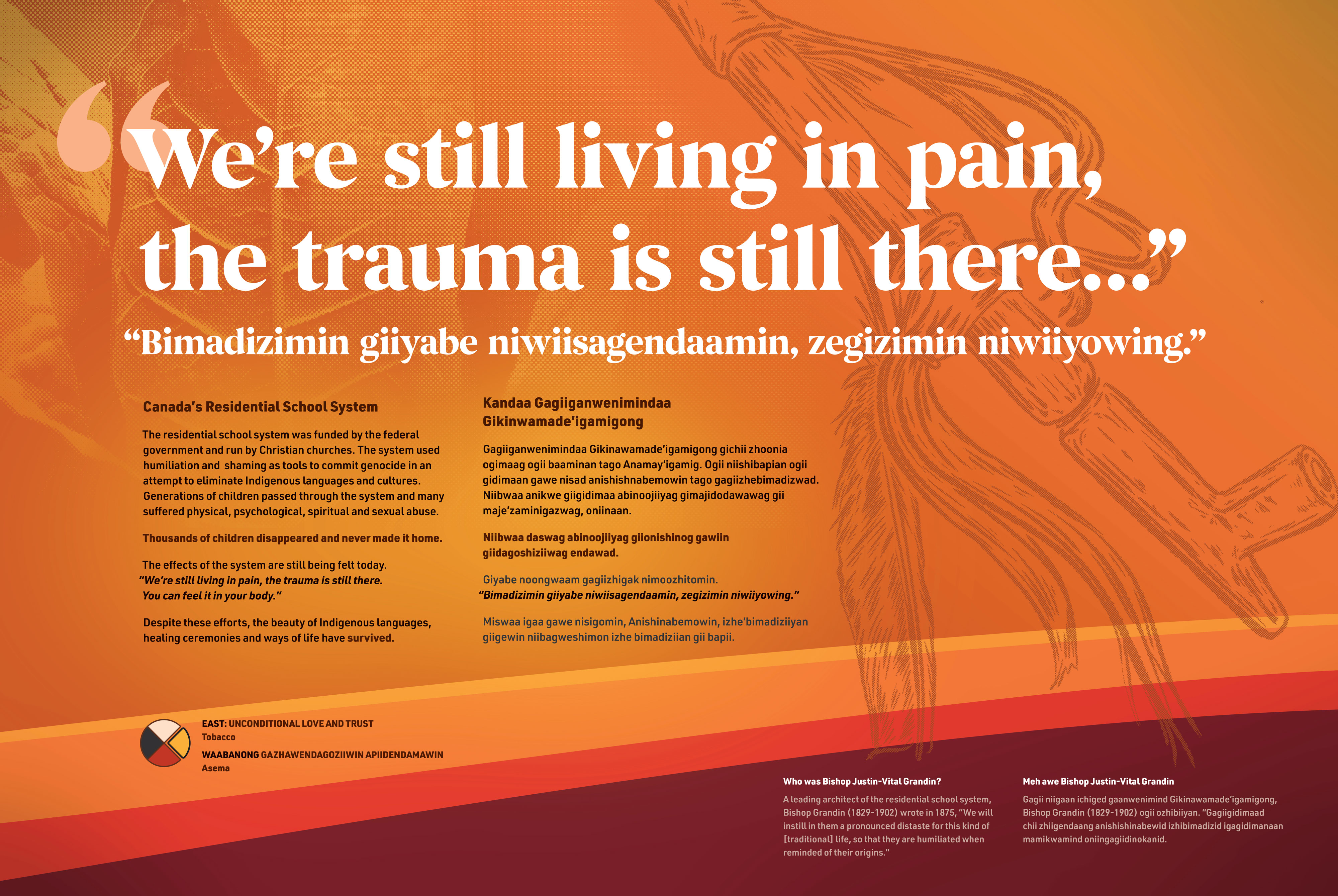
"We're still living in pain, the trauma is still there..."
"Bimadizimin giiyabe niwiisagendaamin, zegizimin niwiiyowing."
Canada's Residential School System
The residential school system was funded by the federal government and run by Christian churches. The system used humiliation and shaming as tools to commit genocide in an attempt to eliminate Indigenous languages and cultures. Generations of children passed through the system and many suffered physical, psychological, spiritual and sexual abuse.
Thousands of children disappeared and never made it home.
The effects of the system are still being felt today. "We're still living in pain, the trauma is still there. You can feel it in your body."
Despite these efforts, the beauty of Indigenous languages, healing ceremonies and ways of life have survived.
-
Kandaa Gagiiganwenimindaa Gikinwamade'igamigong
Gagiiganwenimindaa Gikinawamade'igamigong gichii zhoonia ogimaag ogli baaminan tago Anamay'igamig. Ogii niishibapian ogil gidimaan gawe nisad anishishnabemowin tago gagiizhebimadizwad. Niibwaa anikwe giigidimaa abinoojilyag gimajidodawawag gii maje'zaminigazwag, oniinaan.
Niibwaa daswag abinoojiiyag gilonishinog gawiin glidagoshizliwag endawad.
Giyabe noongwaam gagiizhigak nimoozhitomin. "Bimadizimin giiyabe niwlisagendaamin, zegizimin niwiiyowing."
Miswaa igaa gawe nisigomin, Anishinabemowin, izhe'bimadiziiyan giigewin nilibagweshimon izhe bimadiziian gii bapii.
-
EAST: UNCONDITIONAL LOVE AND TRUST
Tobacco
WAABANONG GAZHAWENDAGOZIIWIN APIIDENDAMAWIN
Asema
-
Who was Bishop Justin-Vital Grandin?
A leading architect of the residential school system, Bishop Grandin (1829-1902) wrote in 1875, "We will instill in them a pronounced distaste for this kind of [traditional] life, so that they are humiliated when reminded of their origins."
-
Meh awe Bishop Justin-Vital Grandin
Gagii niigaan ichiged gaanwenimind Gikinawamaderigamigong, Bishop Grandin (1829-1902) ogii exhibilyan. "Gagiigidimaad chii zhiigendaanganishishinabewid izhibimadizid igagidimanaan mamikwamind onlingaglidinokanid.
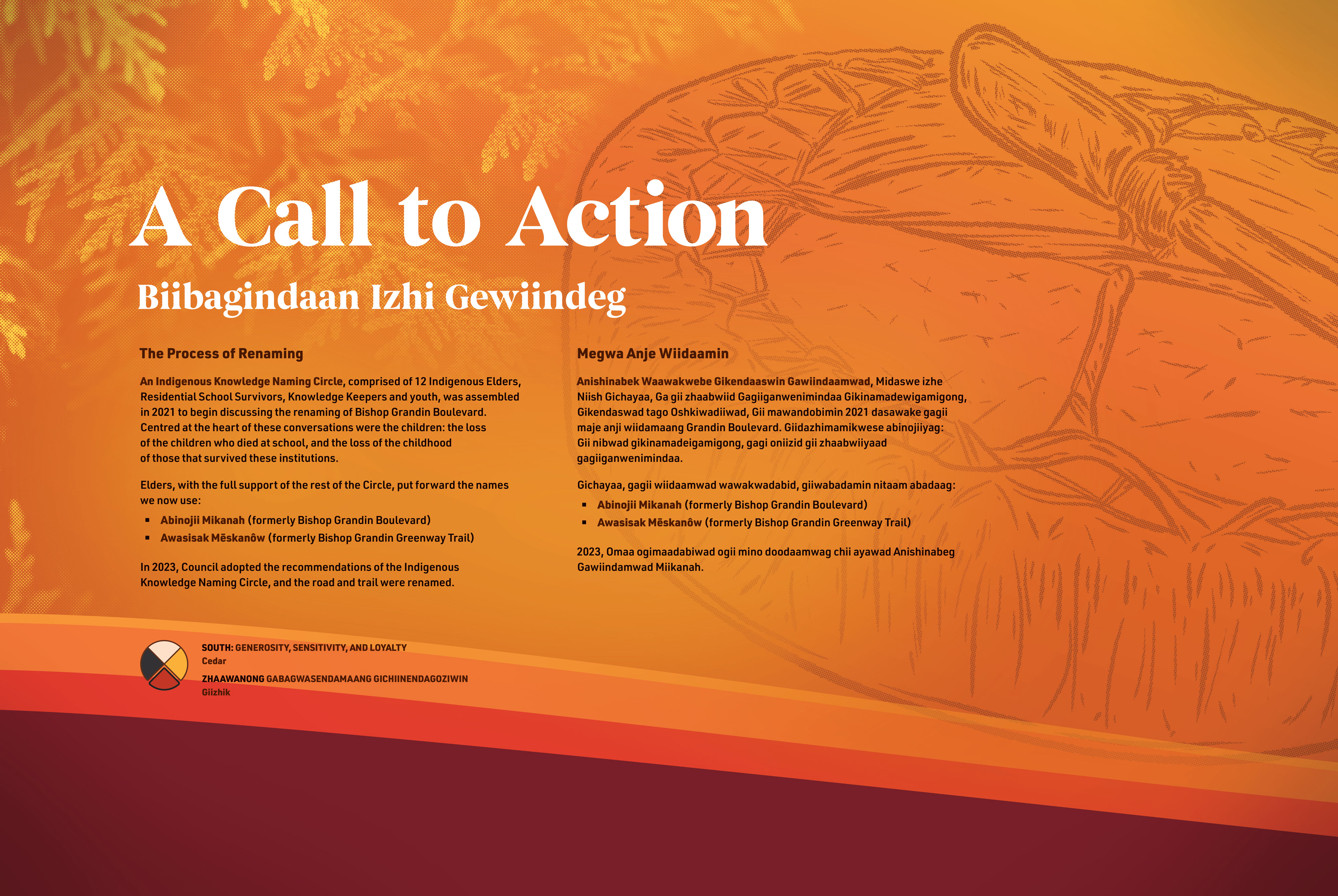
A Call to Action
Biibagindaan Izhi Gewiindeg
The Process of Renaming
An Indigenous Knowledge Naming Circle, comprised of 12 Indigenous Elders, Residential School Survivors, Knowledge Keepers and youth, was assembled in 2021 to begin discussing the renaming of Bishop Grandin Boulevard. Centred at the heart of these conversations were the children: the loss of the children who died at school, and the loss of the childhood of those that survived these institutions.
Elders, with the full support of the rest of the Circle, put forward the names we now use:
- Abinojii Mikanah (formerly Bishop Grandin Boulevard)
- Awasisak Meskanów (formerly Bishop Grandin Greenway Trail)
In 2023, Council adopted the recommendations of the Indigenous Knowledge Naming Circle, and the road and trail were renamed.
-
Megwa Anje Wiidaamin
Anishinabek Waawakwebe Gikendaaswin Gawiindaamwad, Midaswe izhe Niish Gichayaa, Ga gii zhaabwiid Gagiiganwenimindaa Gikinamadewigamigong, Gikendaswad tago Oshkiwadiiwad, Gii mawandobimin 2021 dasawake gagii maje anji wiidamaang Grandin Boulevard. Giidazhimamikwese abinojiyag: Gii nibwad gikinamadeigamigong, gagi oniizid gii zhaabwiiyaad gagliganwenimindaa.
Gichayaa, gagii wiidaamwad wawakwadabid, giiwabadamin nitaam abadaag:
- Abinojii Mikanah (formerly Bishop Grandin Boulevard)
- Awasisak Maskanów (formerly Bishop Grandin Greenway Trail)
2023, Omaa ogimaadabiwad ogii mino doodaamwag chii ayawad Anishinabeg Gawiindamwad Milkanah.
-
SOUTH: GENEROSITY, SENSITIVITY, AND LOYALTY
Cedar
ZHAAWANONG GABAGWASENDAMAANG GICHIINENDAGOZIWIN
Giizhik
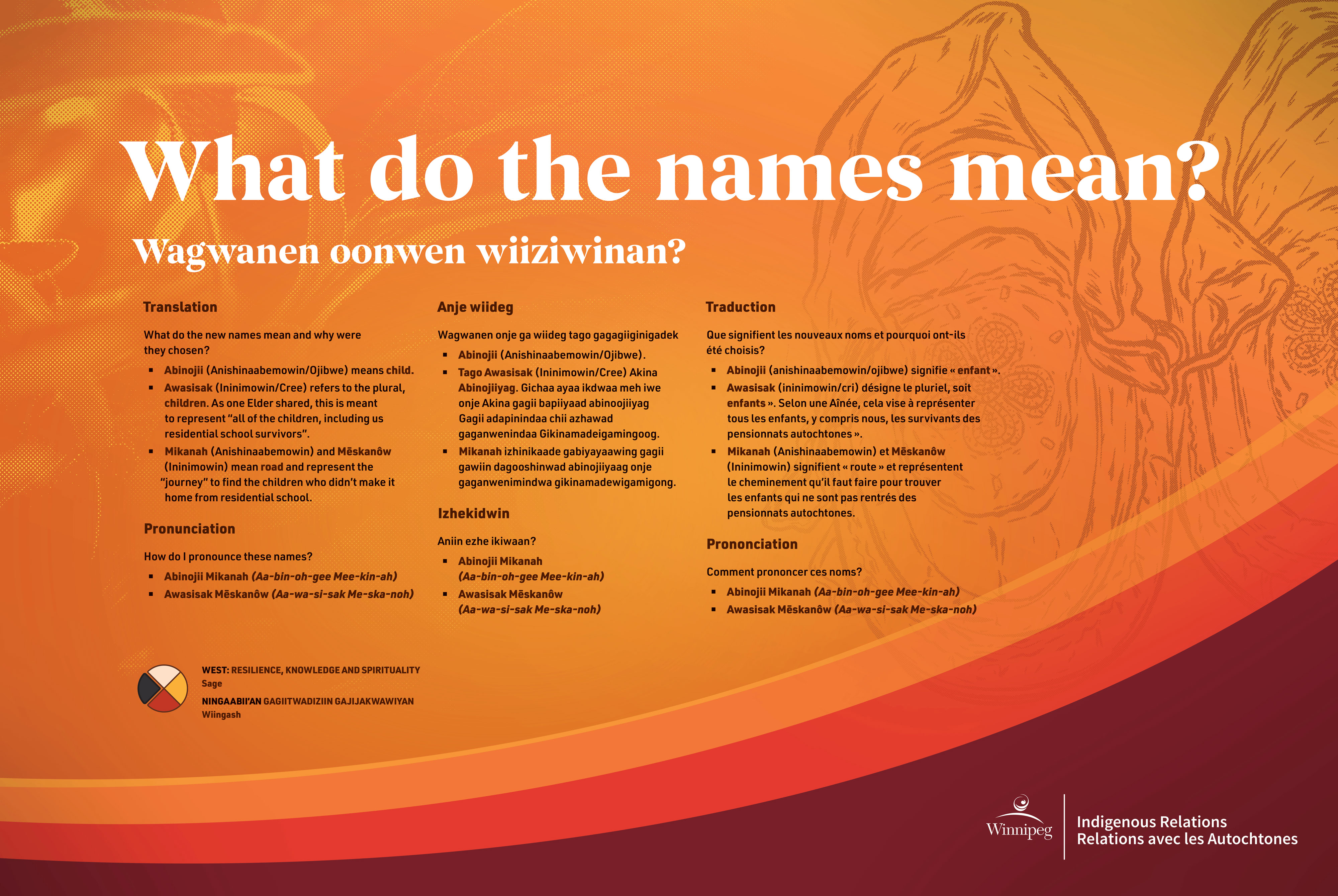
What do the names mean?
Wagwanen oonwen wiiziwinan?
Translation
What do the new names mean and why were they chosen?
- Abinojii (Anishinaabemowin/Ojibwe) means child.
- Awasisak (Ininimowin/Cree) refers to the plural, children. As one Elder shared, this is meant to represent "all of the children, including us residential school survivors".
- Mikanah (Anishinaabemowin) and Měskanow (Ininimowin) mean road and represent the "journey" to find the children who didn't make it home from residential school.
Pronunciation
How do I pronounce these names?
- Abinojii Mikanah (Aa-bin-oh-gee Mee-kin-ah)
- Awasisak Möskanów (Aa-wa-si-sak Me-ska-noh)
-
Anje wildeg
Wagwanen onje ga wiideg tago gagagiiginigadek
- Abinojii (Anishinaabemowin/Ojibwe).
- Tago Awasisak (Ininimowin/Cree) Akina Abinojilyag, Gichaa ayaa ikdwaa meh iwe onje Akina gagii bapiiyaad abinoojiiyag Gagii adapinindaa chii azhawad gaganwenindaa Gikinamadeigamingoog.
- Mikanah izhinikaade gabiyayaawing gagii gawiin dagooshinwad abinojiiyaag onje gaganwenimindwa gikinamadewigamigong.
Izhekidwin
Aniin ezhe ikiwaan?
- Abinojii Mikanah (Aa-bin-oh-gee Mee-kin-ah)
- Awasisak Möskanow (Aa-wa-si-sak Me-ska-noh)
-
WEST: RESILIENCE, KNOWLEDGE AND SPIRITUALITY
Sage
NINGAABITAN GAGIITWADIZIN GAJIJAKWAWIYAN
Wiingash
Winnipeg
Indigenous Relations
Additional marker translations
The goal of the new interpretive panels is to provide a more comprehensive historical perspective and bring awareness to the truths of residential school survivors and their families, while also providing context to the troubling aspects of Bishop Grandin’s legacy, specifically his support for the residential school system.
Additional resources
- City of Winnipeg – Abinojii Mikanah
- City of Winnipeg – Awasisak Mēskanôw Marker Meaning
- Winnipeg Public Library – Indigenous Languages Information Guide
- Winnipeg Public Library - Residential Schools Info Guide
- National Centre for Truth and Reconciliation – Residential School History
- Forgotten – The Métis Residential School Experience
- Inuit and the Residential School System
- National Centre for Truth and Reconciliation – Calls to Action
- Assembly of First Nations – It’s Our Time Education Resources
- Manitoba Museum – Understanding Residential Schools
- Assiniboia Residential School Legacy Group
- Did You See Us? Reunion, Remembrance, and Reclamation at an Urban Indian Residential School
- Sugar Falls - A Residential School Story